US Unemployment Rate Drops to 3.8% in March 2026: Economic Report
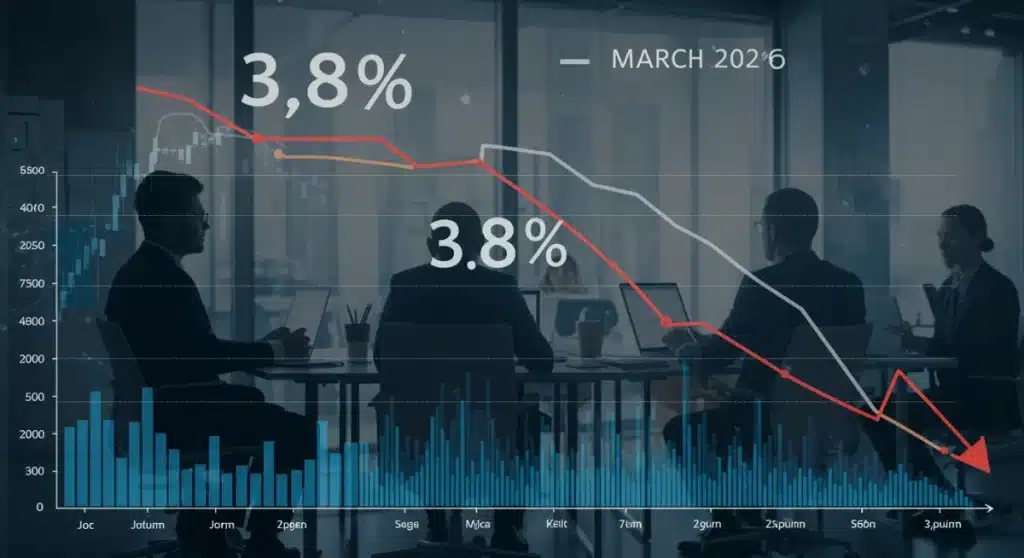
The latest data show that the Unemployment Rate in the United States fell to 3.8% in March 2026, signaling continued labor market resilience. Officials released updated figures highlighting shifts in hiring, wages, and sector performance.
This decline in the Unemployment Rate reflects sustained job creation across key industries, influencing consumer confidence and investment outlooks. Analysts are closely monitoring wage growth projections and participation trends for deeper context.
As the Unemployment Rate reaches new post-recovery benchmarks, policymakers and businesses are assessing what comes next. This report focuses on what changed, why it matters, and the indicators readers should watch in the months ahead.
Understanding the March 2026 Unemployment Data
The recent Economic Report: US Unemployment Rate Drops to 3.8% in March 2026. demonstrates a resilient labor market, surpassing many earlier predictions. This decline to 3.8% signals a robust job market with increasing opportunities for workers.
This positive development in the US Unemployment Rate 2026 is attributed to several factors, including sustained economic growth, increased consumer demand, and strategic business investments. The data provides a strong foundation for future economic stability.
Economists are now dissecting the report to identify specific industries that are driving this growth and to project how long these favorable conditions might persist. The overall outlook appears optimistic, though careful monitoring is still essential.
Key Drivers Behind the Drop
Several critical factors have contributed to the impressive drop in the US Unemployment Rate 2026. Strong hiring in the services sector, particularly in leisure and hospitality, has played a significant role in absorbing new labor market entrants and re-employing those previously displaced.
Furthermore, the technology and healthcare sectors continue to expand, creating high-demand jobs that require specialized skills. This sector-specific growth is diversifying the labor market and enhancing overall stability.
- Increased Consumer Spending: Boosted demand for goods and services.
- Business Expansion: Companies investing in new projects and hiring.
- Government Initiatives: Policies supporting job creation and workforce development.
Sector-Specific Performance
The Economic Report: US Unemployment Rate Drops to 3.8% in March 2026. reveals varied performance across different economic sectors. While some industries have seen exponential growth, others are experiencing steady, incremental improvements.
Manufacturing, for instance, has shown consistent recovery, benefiting from renewed supply chains and increased domestic production. This resilience contributes significantly to the overall positive trend in the US Unemployment Rate 2026.
- Healthcare: Continued demand drives consistent job growth.
- Technology: Innovation and digital transformation create new roles.
- Construction: Infrastructure projects fuel steady employment gains.
Labor Market Strength and Participation Rates
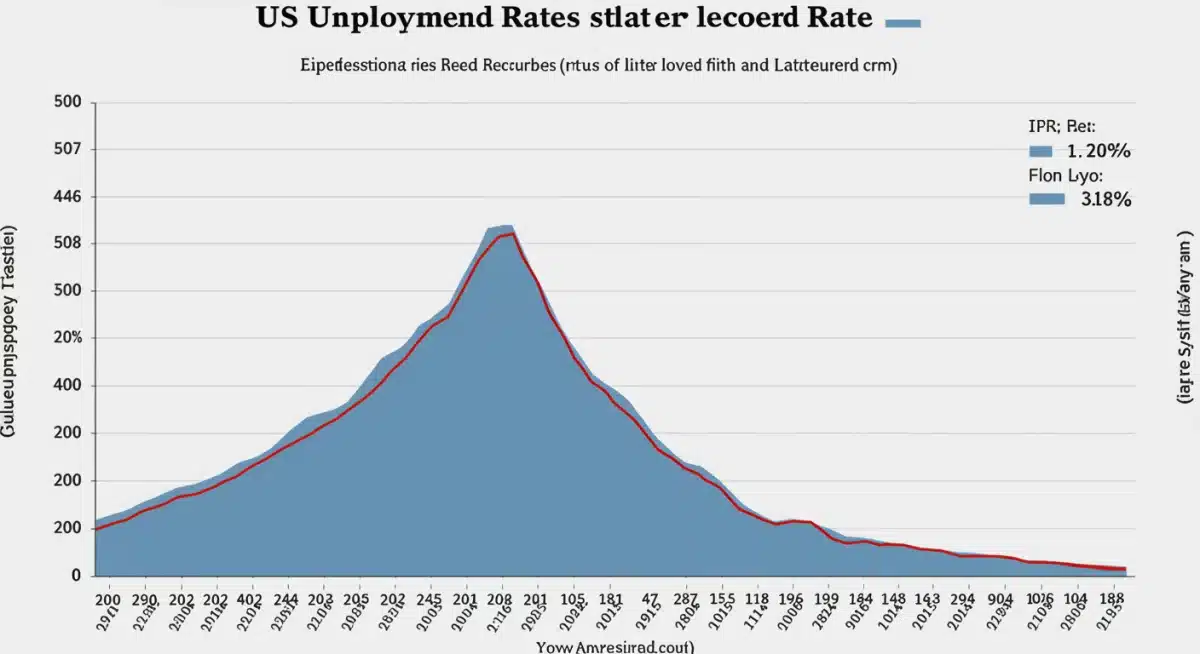
The strength of the labor market, as evidenced by the Economic Report: US Unemployment Rate Drops to 3.8% in March 2026. Goes beyond just the headline unemployment number. It also reflects healthy labor force participation rates.
A rising participation rate, especially among prime-age workers, indicates that more individuals are actively seeking and finding employment. This is a crucial sign of a truly robust and inclusive job market, extending the positive impact of the low US Unemployment Rate 2026.
The report underscores that this strong participation is not merely a short-term phenomenon but rather a sustained trend, suggesting long-term economic stability. This bodes well for both individual financial health and the broader economy.
Demographic Breakdown of Employment Gains
The Economic Report: US Unemployment Rate Drops to 3.8% in March 2026. provides a detailed demographic breakdown of employment gains. This granular data helps to identify which segments of the population are benefiting most from the current economic climate.
Results indicate broad-based improvements across various demographic groups, though some disparities persist. Efforts to address these remaining gaps are crucial for fostering an equitable labor market and maintaining the low US Unemployment Rate 2026.
- Youth Employment: Strong gains in entry-level positions.
- Women in Workforce: Increased participation in various sectors.
- Minority Groups: Notable improvements in employment rates.
Impact on Underemployment
Beyond the headline US Unemployment Rate 2026, the report also sheds light on underemployment figures. A healthy labor market typically sees a decline in individuals working part-time for economic reasons or in jobs below their skill level.
The data suggests a positive trend in reducing underemployment, as more workers transition to full-time positions or roles that better match their qualifications. This contributes to improved worker satisfaction and higher productivity, reinforcing the findings of the Economic Report: US Unemployment Rate Drops to 3.8% in March 2026.
- Full-time Job Growth: More individuals securing stable employment.
- Skill Matching: Better alignment between worker skills and job requirements.
- Economic Security: Enhanced financial stability for households.
Wage Growth Projections and Inflation Concerns
While the Economic Report: US Unemployment Rate Drops to 3.8% in March 2026. is overwhelmingly positive, attention now turns to wage growth and its potential implications for inflation. Strong wage gains are a natural outcome of a tight labor market.
However, policymakers are closely monitoring wage increases to ensure they do not fuel inflationary pressures that could negate the benefits of low unemployment. Balancing job growth with price stability remains a key challenge for the Federal Reserve.
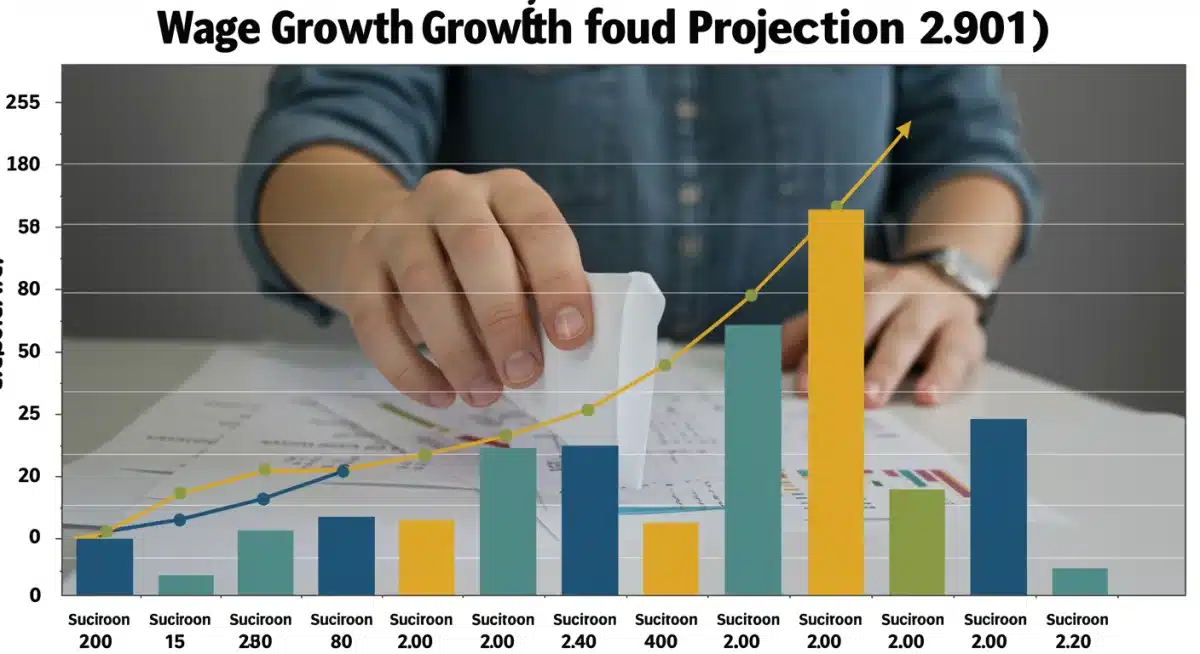
The report includes detailed wage growth projections, offering insights into anticipated salary increases across different industries. These projections are critical for both businesses planning their budgets and individuals making career decisions.
Analyzing Average Hourly Earnings
The latest data on average hourly earnings, included in the Economic Report: US Unemployment Rate Drops to 3.8% in March 2026. shows a steady upward trend. This indicates that employers are competing for talent in a tight labor market.
While beneficial for workers, sustained high wage growth could contribute to inflation if not matched by productivity gains. The current trajectory for the US Unemployment Rate 2026 suggests this dynamic will continue to be a focus.
- Increased Purchasing Power: Higher wages benefit consumers.
- Inflationary Pressures: Potential for rising prices if not managed.
- Productivity Correlation: Importance of aligning wage growth with output.
Future Wage Growth Outlook
The outlook for wage growth remains positive, with projections suggesting continued increases in the coming months. This is largely driven by persistent labor shortages in key sectors and ongoing demand for skilled workers, a direct consequence of the low US Unemployment Rate 2026.
The Economic Report: US Unemployment Rate Drops to 3.8% in March 2026. anticipates that wage gains will remain robust, albeit with potential moderation to prevent overheating of the economy.
- Skilled Labor Demand: Driving up salaries in specialized fields.
- Minimum Wage Adjustments: Contributing to overall wage increases.
- Collective Bargaining: Impact of union negotiations on pay.
Economic Implications and Policy Responses
The positive findings from the Economic Report: US Unemployment Rate Drops to 3.8% in March 2026. have significant economic implications. A low unemployment rate generally correlates with higher consumer confidence and increased economic activity.
This robust economic environment provides policymakers with more flexibility in addressing other economic challenges, such as housing affordability and supply chain resilience. The sustained low US Unemployment Rate 2026 strengthens the overall economic foundation.
However, it also presents challenges, particularly concerning managing inflation and ensuring sustainable growth. The Federal Reserve’s future actions will be heavily influenced by these latest labor market figures.
Federal Reserve’s Stance
The Federal Reserve is carefully evaluating the Economic Report: US Unemployment Rate Drops to 3.8% in March 2026. as it considers its monetary policy decisions. A strong labor market typically gives the Fed more room to potentially adjust interest rates to manage inflation.
The central bank’s dual mandate of maximum employment and price stability means that the low US Unemployment Rate 2026 is a positive, but it also increases the scrutiny on inflation data. Future rate decisions will be data-dependent, with a keen eye on both employment and price indices.
- Interest Rate Decisions: Influenced by labor market strength.
- Inflation Targeting: Balancing employment with price stability.
- Economic Projections: Fed updates based on new data.
Government Fiscal Policy
In response to the favorable labor market conditions highlighted by the Economic Report: US Unemployment Rate Drops to 3.8% in March 2026, government fiscal policies may also shift. With robust employment, there might be less immediate pressure for large-scale stimulus packages.
Instead, focus could turn to targeted investments in infrastructure, education, and innovation to further enhance productivity and long-term growth. The low US Unemployment Rate 2026 offers a strong backdrop for strategic fiscal planning.
- Targeted Investments: Focusing on long-term economic growth.
- Budgetary Considerations: Impact on federal spending priorities.
- Debt Management: Opportunities to improve fiscal health.
Regional Variations in Employment
While the national Economic Report: US Unemployment Rate Drops to 3.8% in March 2026. presents an optimistic picture, it is important to acknowledge regional variations. Economic performance and job growth can differ significantly across states and metropolitan areas.
Some regions may experience even lower unemployment rates due to thriving local industries, while others might still be recovering. Understanding these localized trends is crucial for a complete economic assessment, even with the impressive national US Unemployment Rate 2026.
The report provides state-by-state breakdowns, allowing for a more nuanced understanding of the labor market’s health across the diverse American landscape. This granularity helps local policymakers and businesses tailor their strategies effectively.
State-by-State Analysis
The Economic Report: US Unemployment Rate Drops to 3.8% in March 2026. includes a detailed state-by-state analysis, revealing varied employment landscapes. States with strong technology hubs or energy sectors often report lower unemployment rates.
Conversely, states heavily reliant on industries facing structural changes might still be working towards full employment. These regional differences underscore the complexity behind the single national US Unemployment Rate 2026 figure.
- High-Growth States: Benefiting from specific industry clusters.
- Recovery States: Showing consistent but slower improvements.
- Local Policies: Influence on regional job market dynamics.
Metropolitan Area Performance
Within states, metropolitan areas often exhibit distinct employment trends. Major urban centers, typically diverse in their economic base, tend to show strong job creation and lower unemployment, reflecting the overall positive sentiment from the Economic Report: US Unemployment Rate Drops to 3.8% in March 2026.
Suburban and rural areas might face different challenges, such as access to skilled labor or industry concentration. These local nuances are vital for understanding the true impact of the improving US Unemployment Rate 2026.
- Urban Centers: Driving significant job gains.
- Rural Areas: Addressing unique employment challenges.
- Commuting Patterns: Impact on regional labor markets.
Future Outlook and Potential Headwinds
The positive momentum from the Economic Report: US Unemployment Rate Drops to 3.8% in March 2026. sets a favorable tone for the coming months. However, economists also identify potential headwinds that could impact the labor market’s trajectory.
Global economic uncertainties, geopolitical tensions, and persistent inflation risks remain factors to watch. These could influence business investment and consumer confidence, potentially affecting the otherwise robust US Unemployment Rate 2026.
Despite these potential challenges, the overall outlook remains cautiously optimistic, with analysts expecting continued stability and gradual improvements. Proactive monitoring and adaptive policies will be key to navigating future economic shifts.
Global Economic Influences
The US economy does not operate in isolation; global economic conditions significantly influence domestic labor markets. International trade dynamics, global supply chain stability, and economic performance in major trading partners can all impact the US Unemployment Rate 2026.
A slowdown in global growth could dampen demand for US exports, potentially affecting manufacturing and other export-oriented sectors. Conversely, a strong global economy would further bolster the positive trends seen in the Economic Report: US Unemployment Rate Drops to 3.8% in March 2026.
- Trade Policies: Impact on import and export industries.
- Global Demand: Affecting manufacturing and services.
- Geopolitical Stability: Influencing investment and market confidence.
Technological Advancements and Automation
The ongoing march of technological advancements and automation presents both opportunities and challenges for the labor market. While these innovations can create new jobs and increase productivity, they also raise questions about job displacement in certain sectors, even with a low US Unemployment Rate 2026.
The Economic Report: US Unemployment Rate Drops to 3.8% in March 2026. acknowledges the need for continuous workforce training and adaptation to ensure that workers possess the skills required for the jobs of the future.
- Job Creation: New roles emerging from innovation.
- Skill Gaps: Need for continuous education and reskilling.
- Productivity Gains: Automation enhancing economic output.
Consumer Confidence and Spending Trends
A low US Unemployment Rate 2026 typically translates into higher consumer confidence, which in turn fuels increased spending. This cycle is a vital component of economic growth, as consumer expenditure accounts for a significant portion of the GDP.
The Economic Report: US Unemployment Rate Drops to 3.8% in March 2026. reinforces this connection, suggesting that individuals feel more secure in their jobs and are more willing to make significant purchases.
This positive sentiment is crucial for businesses, as it drives demand and encourages further investment and expansion. Sustained consumer confidence is a key indicator for continued economic health.
Retail Sales Performance
Retail sales figures are a direct reflection of consumer confidence and spending habits. With the Economic Report: US Unemployment Rate Drops to 3.8% in March 2026. showing a strong labor market, retail sales are expected to maintain robust growth.
This performance is vital for industries ranging from automotive to electronics, signaling healthy market conditions. The stability provided by a low US Unemployment Rate 2026 creates a favorable environment for retailers.
- Increased Discretionary Spending: Consumers buying non-essential items.
- E-commerce Growth: Online sales continue to expand.
- Sector-Specific Performance: Varying retail results across different categories.
Impact on Housing Market
The strong labor market and low US Unemployment Rate 2026 also have a profound impact on the housing market. Higher job security and wage growth empower more individuals to pursue homeownership or invest in real estate.
This increased demand, as highlighted in the broader context of the Economic Report: US Unemployment Rate Drops to 3.8% in March 2026, can lead to rising home prices and increased construction activity. However, affordability remains a concern in some areas.
- Homeownership Rates: Potential for increases with job stability.
- Mortgage Demand: Strong interest in housing loans.
- Affordability Challenges: Balancing demand with accessible pricing.
| Key Point | Brief Description |
|---|---|
| Unemployment Rate | US Unemployment Rate drops to 3.8% in March 2026, indicating a strong labor market. |
| Labor Market Strength | Robust job creation across sectors and healthy participation rates contribute to market strength. |
| Wage Growth Projections | Continued upward trend in wages anticipated, with careful monitoring for inflation impacts. |
| Economic Implications | Positive impact on consumer confidence, spending, and housing market, guiding policy decisions. |
Frequently Asked Questions About the US Labor Market
The 3.8% US Unemployment Rate in March 2026 signifies a robust and healthy labor market. It indicates that a high percentage of the workforce is employed, reflecting strong economic demand and business activity across various sectors, as detailed in the Economic Report: US Unemployment Rate Drops to 3.8% in March 2026 – An In-Depth Look at Labor Market Strength and Wage Growth Projections..
The 3.8% US Unemployment Rate 2026 is significantly lower than the historical average, which typically hovers around 5-6%. This low figure highlights an exceptionally tight labor market, where employers are actively seeking workers, contributing to the overall strength described in the Economic Report: US Unemployment Rate Drops to 3.8% in March 2026 – An In-Depth Look at Labor Market Strength and Wage Growth Projections..
The strong labor market is primarily driven by sustained economic growth, increased consumer spending, and targeted investments in key sectors like technology and healthcare. These factors collectively contribute to robust job creation and the impressive US Unemployment Rate 2026, as analyzed in the Economic Report: US Unemployment Rate Drops to 3.8% in March 2026 – An In-Depth Look at Labor Market Strength and Wage Growth Projections..
A low US Unemployment Rate 2026 typically leads to increased wage growth as companies compete for a limited pool of workers. The Economic Report: US Unemployment Rate Drops to 3.8% in March 2026 – An In-Depth Look at Labor Market Strength and Wage Growth Projections. projects continued upward pressure on wages, benefiting employees but also requiring careful monitoring for potential inflationary effects.
Despite the positive Economic Report: US Unemployment Rate Drops to 3.8% in March 2026 – An In-Depth Look at Labor Market Strength and Wage Growth Projections., potential risks include global economic uncertainties, persistent inflation, and geopolitical tensions. These factors could impact business confidence and investment, requiring adaptive policy responses to maintain the current stability of the US Unemployment Rate 2026.
Next Steps for Financial Planning and Economic Monitoring
The insights from the Economic Report: US Unemployment Rate Drops to 3.8% in March 2026. are pivotal for both individual financial planning and broader economic monitoring.
With a robust US Unemployment Rate 2026, individuals might consider optimizing investments, reviewing career paths, and planning for sustained financial health.
Businesses should leverage this strong labor market for strategic expansion and talent acquisition. Continued vigilance on inflation and global economic shifts remains crucial, as these will shape the future trajectory of the US economy.
