Geopolitical Events in May 2026 Push U.S. Oil Prices Higher
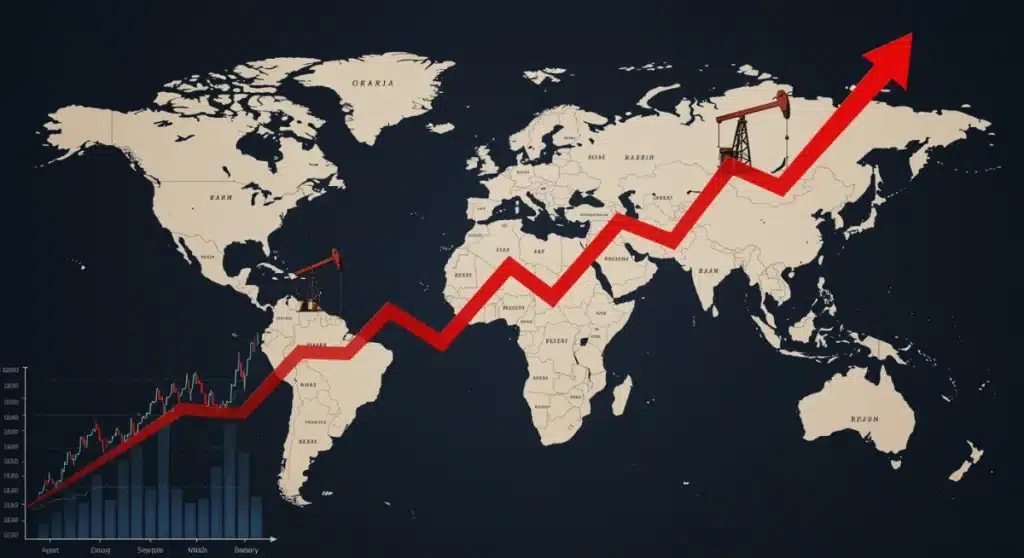
Recent Geopolitical Events in May 2026 are drawing attention from energy analysts and government agencies as oil markets show increased volatility. Early projections indicate a potential 15% surge in gasoline prices for the next quarter.
Reports from energy monitoring groups suggest that supply disruptions and international tensions are contributing to rising crude prices. These developments could directly impact transportation costs and household budgets across the United States.
Understanding the role of Geopolitical Events in energy markets is essential for consumers and policymakers. Experts recommend monitoring fuel price forecasts, global supply updates, and official energy reports in the coming months.
Understanding the Geopolitical Landscape in May 2026
The global political stage in May 2026 presents a complex web of tensions and alliances that directly impact energy markets. Regional conflicts, particularly in the Middle East and Eastern Europe, continue to exert significant pressure on oil supply chains.
These ongoing instabilities create an environment of uncertainty, leading to speculative trading and heightened risk premiums on crude oil. The direct consequence is a ripple effect that extends to consumer prices at the pump in the United States.
Nations are increasingly vying for energy security, often through strategies that can inadvertently disrupt global supply or increase demand. This competitive landscape is a primary driver behind the projected surge in US oil prices.
Analysts from the International Energy Agency (IEA) confirm that the confluence of these factors points towards an unavoidable increase. The IEA’s latest report underscores that the resilience of global oil infrastructure is being tested like never before.
Key Regions Driving Instability
- Middle East: Persistent regional conflicts and political uncertainties in key oil-producing nations continue to pose significant threats to supply. Disruptions to shipping lanes, particularly through critical chokepoints, remain a constant concern for global markets.
- Eastern Europe: Ongoing geopolitical tensions in this region, coupled with sanctions and counter-sanctions, limit oil and gas flows, forcing nations to seek alternative, often more expensive, sources. This re-routing adds to global transportation costs and reduces overall market liquidity.
- Other Emerging Hotspots: New areas of political unrest, though smaller in scale, contribute to the overall climate of unpredictability. These localized issues can quickly escalate and impact adjacent energy infrastructure or trade routes, further fueling the rise in US oil prices.
The interplay of these regional dynamics creates a volatile market where price stability is increasingly difficult to achieve. Energy security has become a paramount concern for major economies, influencing foreign policy decisions and trade agreements.
Projected 15% Surge at the Pump: What It Means for Consumers
The forecast of a 15% surge in US oil prices translates directly into higher costs for American drivers and households. This increase is not merely a statistical figure but a tangible impact on daily budgets and overall economic stability.
Such a significant jump in fuel prices will inevitably lead to increased operational costs for businesses relying on transportation, from logistics and delivery services to agriculture. These costs are often passed on to consumers, contributing to broader inflationary pressures across various sectors.
Families will need to adjust their spending habits, potentially cutting back on discretionary expenses as a larger portion of their income goes towards transportation. The ripple effect extends to personal finance, making sound budgeting more critical than ever.
According to the American Automobile Association (AAA), average gasoline prices could reach unprecedented levels, impacting travel and leisure industries significantly. This anticipated surge marks a critical period for consumer financial planning.
Consumer Spending Adjustments
- Transportation Costs: Commuting expenses will rise sharply, forcing many to reconsider carpooling, public transport, or remote work options. Long-distance travel, especially by car, will become considerably more expensive, impacting vacation plans.
- Goods and Services: The cost of virtually all goods, from groceries to electronics, will see an uptick due to higher freight charges. Businesses will factor increased fuel expenses into their pricing, affecting consumer purchasing power.
- Household Budgets: Families will face tighter budgets, necessitating re-evaluation of non-essential spending. Discretionary income will shrink, potentially leading to reduced expenditure on entertainment, dining out, and other leisure activities.
The cumulative effect of these increases could dampen consumer confidence and spending, which are vital components of the US economy. The impact of Geopolitical Events in May 2026 highlights the need for proactive financial strategies.
Economic Implications Beyond the Gas Station
The impact of rising oil prices extends far beyond the individual consumer, reverberating through the entire US economy. Industries ranging from manufacturing to aviation will face escalating operational costs, potentially slowing economic growth.
Inflationary pressures, already a concern, are expected to intensify as energy costs climb. This could prompt the Federal Reserve to consider further monetary policy adjustments, which might include interest rate hikes, impacting borrowing costs for businesses and individuals.
The competitiveness of American exports could also be affected if domestic production costs rise significantly due due to higher energy input. This creates a challenging environment for sustained economic expansion and international trade balances.
Small and medium-sized businesses, often operating on thinner margins, will be particularly vulnerable to these rising costs. Many may struggle to absorb the increases, leading to potential layoffs or reduced investment.
These pressures further highlight the economic impact of Geopolitical Events influencing US oil prices.
Industry-Specific Challenges
The airline industry, heavily reliant on jet fuel, will undoubtedly pass on increased costs to passengers through higher ticket prices. This could lead to a reduction in air travel demand, affecting tourism and related sectors.
Agricultural producers, who depend on fuel for farm machinery and transportation of goods, will see their expenses rise. This will likely translate into higher food prices for consumers, exacerbating inflationary trends across the board.
Manufacturing sectors that rely on oil as a raw material or energy source will also face higher production costs. This pressure may force companies to reassess pricing strategies and operational efficiency.
As a result, some businesses could shift supply chains or explore alternatives abroad. These adjustments reflect broader market reactions to ongoing Geopolitical Events affecting energy prices.
Historical Context: Lessons from Past Oil Shocks
History offers valuable insights into how economies respond to significant oil price fluctuations driven by geopolitical events. Past oil shocks, such as those in the 1970s and early 2000s, demonstrate the profound and often long-lasting effects on global markets.
These historical precedents underscore the need for diversified energy strategies and robust economic policies to cushion the blow of future price surges. Understanding these patterns helps in forecasting the potential trajectory of the current situation.
While the specific geopolitical triggers may vary, the underlying economic mechanisms of supply and demand, coupled with market speculation, remain consistent. Learning from these past experiences is crucial for navigating the challenges of May 2026.
Key Takeaways from Previous Crises
- Supply Chain Vulnerability: Past crises exposed the fragility of global oil supply chains, emphasizing the need for strategic reserves and alternative transport routes. Disruptions, whether due to conflict or natural disaster, can have far-reaching consequences.
- Inflationary Spiral: Historically, significant oil price increases have often been precursors to broader inflationary periods, as higher energy costs filter through the economy. Central banks have often responded with tightening monetary policies to control rising prices.
- Economic Slowdown: Major oil shocks have frequently coincided with periods of economic recession or slowed growth, as consumer spending decreases and business investment becomes more cautious. This economic contraction is a direct result of reduced purchasing power and increased operational costs.
The current situation is not unprecedented, but the scale and complexity of May 2026 Geopolitical Events add new layers of challenge. These developments require close attention as markets react to heightened uncertainty.
This situation calls for careful analysis grounded in historical lessons about energy price shocks. Monitoring supply signals and policy responses can help contextualize the projected impact.
Government and Industry Responses to Mitigate Impact
In anticipation of the projected surge, both government bodies and the energy industry are exploring various strategies to mitigate the adverse effects. These responses aim to stabilize markets, ensure supply, and protect consumers from the sharpest price increases.
Government interventions may include tapping into strategic petroleum reserves, negotiating diplomatic solutions to regional conflicts, or implementing targeted subsidies for vulnerable populations. The goal is to balance market stability with consumer protection.
The energy industry, meanwhile, is likely to increase domestic production where feasible and invest in more resilient infrastructure to minimize future disruptions. Diversification of energy sources also remains a long-term goal to reduce reliance on volatile regions.
Strategic Measures Under Consideration
One primary strategy involves diplomatic efforts to de-escalate tensions in key oil-producing regions. Collaborative international initiatives aimed at fostering stability are crucial for ensuring a steady global oil supply and preventing further price volatility.
Domestically, policymakers are examining options such as temporary tax relief on gasoline or direct financial aid programs for low-income households. These measures are designed to alleviate the immediate financial burden on consumers facing higher fuel costs.
Furthermore, there is a renewed push to accelerate the transition to renewable energy and improve efficiency across sectors. This strategy aims to reduce dependence on fossil fuels and strengthen long-term energy resilience.
By expanding clean energy and efficiency measures, policymakers hope to limit the economic impact of future Geopolitical Events on oil markets and fuel prices.
The Role of OPEC+ and Global Supply Dynamics
The decisions made by OPEC+ nations continue to play a pivotal role in shaping global oil supply and, consequently, US oil prices. Their collective production policies directly influence market availability and price levels.
In May 2026, the solidarity and strategic alignment among OPEC+ members are under renewed scrutiny amidst heightened geopolitical tensions. Any deviation from agreed-upon production quotas can send immediate shockwaves through the international energy market.
Market analysts are closely watching upcoming OPEC+ meetings for signs of production adjustments or changes in their long-term supply outlook. These decisions will significantly impact the severity and duration of the projected price surge.
Reports from Bloomberg suggest that internal disagreements within OPEC+ over production levels could add further uncertainty to the global supply outlook. These tensions may intensify the effects of ongoing Geopolitical Events on oil prices.
Factors Influencing OPEC+ Decisions
- Internal Economic Needs: Individual OPEC+ members have varying economic requirements and fiscal pressures, which can influence their stance on production quotas. Some may push for higher production to increase revenue, while others prioritize price stability.
- Global Demand Forecasts: OPEC+ decisions are heavily influenced by their projections of global oil demand. If demand is expected to remain robust, they might maintain or slightly increase production; conversely, a weakening demand outlook could lead to cuts.
- Geopolitical Alliances: The geopolitical relationships and alliances among OPEC+ nations also play a significant role. These political dynamics can sometimes override purely economic considerations when setting production targets, directly affecting.
The delicate balance between maximizing revenue, maintaining market share, and responding to global political pressures makes OPEC+ a critical player in the unfolding energy narrative. Their actions or inactions will directly contribute to the 15% surge at the pump.
Long-Term Outlook: Diversification and Energy Security
While immediate concerns focus on the projected 15% surge, the long-term outlook emphasizes the critical need for energy diversification and enhanced security. Reducing reliance on volatile fossil fuel markets is a strategic imperative for the United States.
Investments in renewable energy sources, such as solar, wind, and geothermal, are gaining momentum as viable alternatives to traditional oil and gas. These technologies offer a path towards greater energy independence and environmental sustainability.
Furthermore, advancements in energy storage solutions and smart grid technologies are crucial for integrating renewables into the national power grid effectively. This systemic shift aims to build a more resilient and less geopolitically sensitive energy infrastructure.
The latest strategic plan from the United States Department of Energy highlights major investments in clean energy research and development. This effort reflects a commitment to strengthening energy resilience.
These initiatives aim to reduce long-term vulnerability to oil price volatility linked to Geopolitical Events affecting global energy markets.
Paths to Enhanced Energy Security
Accelerating the deployment of renewable energy projects across the nation will reduce the overall demand for imported oil and gas. This includes expanding solar farms, wind turbine installations, and supporting geothermal energy initiatives.
Developing and improving energy efficiency standards in buildings, transportation, and industrial processes can significantly lower overall energy consumption. This approach contributes to both economic savings and reduced reliance on external energy sources.
Investing in domestic oil and gas production, when conducted with environmental responsibility, can serve as a short- to medium-term buffer against international price volatility. This approach helps stabilize supply while global markets react to ongoing Geopolitical Events.
At the same time, combining domestic production with clean energy expansion supports long-term sustainability goals. This balanced strategy helps reduce exposure to sudden oil price shocks in the future.
Preparing for Future Volatility in US Oil Prices
Given the current geopolitical climate, preparing for continued volatility in US oil prices is a prudent approach for both consumers and policymakers. The May 2026 surge is likely a precursor to ongoing market fluctuations.
For individuals, this means exploring fuel-efficient vehicles, optimizing travel, and budgeting for higher energy costs. Proactive financial planning can help absorb the impact of future price hikes and maintain financial stability.
For the government, it involves continuously assessing global events, maintaining strategic reserves, and fostering international cooperation to stabilize energy markets. The goal is to build a robust system that can withstand external shocks.
The National Bureau of Economic Research consistently highlights the cyclical nature of energy market volatility. Periods of stability are often followed by rapid price shifts triggered by unexpected developments.
This pattern underscores how sensitive oil markets remain to Geopolitical Events and global disruptions. Current forecasts reflect this historical reality and reinforce the need for careful monitoring of energy trends.
Strategies for Resilience
- Individual Preparedness: Consumers should consider consolidating trips, using public transportation, or investing in more fuel-efficient vehicles to reduce their personal exposure to rising fuel costs. Budgeting for higher energy expenses is essential for financial stability.
- Business Adaptations: Companies can explore optimizing logistics, investing in energy-saving technologies, or diversifying their supply chains to reduce their vulnerability to fuel price fluctuations. Flexible operational models are key to navigating market changes.
- Governmental Foresight: Policymakers must focus on long-term energy planning, including sustained investment in renewable energy, maintaining strategic reserves, and developing robust diplomatic channels to address geopolitical risks. This comprehensive approach is vital to mitigate.
These proactive measures are not just about reacting to the current surge but about building a more resilient energy future. The lessons from May 2026 will undoubtedly shape future policy and consumer behavior.
| Key Point | Brief Description |
|---|---|
| Geopolitical Tensions | Regional conflicts in May 2026 directly impact global oil supply, increasing market volatility. |
| 15% Price Surge | US oil prices are projected to rise by 15% at the pump, affecting consumer budgets and business costs. |
| Economic Impact | Higher fuel costs will fuel inflation, potentially slow economic growth, and strain various industries. |
| Mitigation Strategies | Governments and industry are exploring strategic reserves, diplomatic solutions, and energy diversification to lessen the impact. |
Frequently Asked Questions About Oil Price Surges
The projected 15% surge stems primarily from intensifying geopolitical tensions in key oil-producing regions in May 2026. Disruptions to supply chains, increased risk premiums, and potential production policy shifts by OPEC+ nations are significant contributors to this forecast.
American consumers will experience higher costs at the gas pump, directly impacting their daily commutes and travel budgets. Additionally, increased transportation costs for goods will lead to higher prices for various products and services, contributing to overall inflation.
Yes, the US government is exploring several mitigation strategies, including potentially releasing oil from strategic petroleum reserves. Diplomatic efforts to stabilize volatile regions and discussions around targeted consumer relief programs are also under consideration to cushion the financial blow.
OPEC+ nations are crucial in global oil supply dynamics. Their decisions on production quotas directly influence market availability and prices. Any changes in their collective output or internal disagreements can significantly exacerbate or alleviate the projected price surge.
Long-term solutions focus on energy diversification and security. This includes accelerating investments in renewable energy sources like solar and wind, improving energy efficiency, and developing more resilient energy infrastructure to reduce reliance on geopolitically sensitive oil markets.
What Happens Now
The projected 15% surge in US oil prices demands immediate attention and strategic foresight. Analysts point to Geopolitical Events in May 2026 as a major factor influencing energy markets and fuel costs.
Policymakers and industry leaders must prioritize stability through diplomatic engagement and domestic energy initiatives.
Consumers should prepare for increased costs by revisiting household budgets and exploring fuel-efficient alternatives.
The ongoing developments will shape both economic policy and personal finance in the coming months, underscoring the critical importance of monitoring these global dynamics.
