Budgeting’s Educational Value: 3-Month Spending Plan for 2026

Latest developments on The Educational Value of Budgeting: Implementing a 3-Month Spending Plan for 2026 highlight a growing push for financial literacy across the United States. Government-backed initiatives and programs such as the FDIC’s Money Smart are expanding access to budgeting education, reinforcing its role as a foundational life skill.
Recent updates show that structured budgeting methods, including short-term frameworks like 3-month spending plans, are increasingly recommended by financial experts. These approaches help individuals track expenses, set goals, and adjust behavior, reducing overspending and improving long-term financial stability.
Looking ahead, stakeholders should monitor curriculum adoption in schools, digital budgeting tools, and measurable outcomes in financial behavior. Key factors include user engagement, consistency in tracking expenses, and how effectively short-term budgeting strategies translate into sustained financial health improvements.
Understanding the Core of Educational Budgeting
The concept of educational budgeting value extends beyond mere financial tracking; it fosters a profound understanding of income, expenses, and savings. This foundational knowledge empowers individuals to make informed decisions, transforming abstract financial theories into tangible, actionable practices.
Implementing a structured spending plan, especially one spanning a defined period like three months, provides a practical laboratory for financial learning. It allows for real-time observation of spending habits and their direct impact on financial goals, offering invaluable insights not attainable through theoretical study alone.
This hands-on approach to budgeting cultivates discipline and foresight, essential qualities for long-term financial stability. By actively managing funds, individuals develop a heightened awareness of their financial landscape, paving the way for more strategic monetary choices in the future.
Why a 3-Month Spending Plan for 2026 is Crucial
A 3-month spending plan for 2026 offers a manageable yet comprehensive timeframe for individuals to assess and adjust their financial behaviors. This period is long enough to reveal consistent spending patterns and short enough to maintain focus and motivation.
The year 2026 presents a unique economic landscape, influenced by evolving market conditions and potential shifts in personal income or expenses. A focused, short-term plan allows for adaptability, enabling individuals to respond effectively to these changes without being overwhelmed by a year-long commitment.
This specific duration also provides a clear benchmark for evaluating progress and making necessary modifications before committing to longer-term financial strategies. It serves as an excellent training ground for more extensive financial planning.
- Establishes clear, achievable financial targets within a defined period.
- Provides immediate feedback on spending habits and budget adherence.
- Allows for quick adjustments to the plan based on real-world outcomes.
- Builds confidence in managing personal finances effectively.
The Educational Benefits of Practical Budgeting
Engaging in practical budgeting offers a unique educational experience, far surpassing passive learning methods. It forces individuals to confront their financial realities, identify areas of overspending, and strategize for savings and investments.
This active participation in financial management develops critical thinking skills, as individuals must analyze their financial data and make decisions that align with their goals. The process of creating and adhering to a budget becomes a continuous learning curve, refining financial literacy with each cycle.
The educational value of budgeting also extends to understanding economic principles, such as inflation, interest rates, and investment returns, through direct application. These concepts become less abstract when seen in the context of one’s own financial journey.
Developing Financial Discipline and Accountability
One of the primary educational outcomes of budgeting is the cultivation of financial discipline. Regularly tracking income and expenses instills a sense of responsibility and encourages mindful spending, moving away from impulsive purchases.
Accountability is also significantly enhanced through a structured budget. When individuals set financial goals and monitor their progress, they become more accountable to themselves, fostering a stronger commitment to their financial well-being.
This discipline translates into practical benefits, such as reduced debt, increased savings, and a greater sense of financial security. These are invaluable life skills that extend far beyond the immediate budgeting period.
Components of an Effective 3-Month Spending Plan for 2026
An effective 3-month spending plan for 2026 requires several key components to ensure its success and maximize its educational impact. These elements work in concert to provide a comprehensive framework for financial management.
The plan should clearly delineate all sources of income, both regular and irregular, to establish a realistic baseline. This initial step is crucial for understanding the total funds available for allocation over the three-month period.
Equally important is a detailed breakdown of all expenses, categorized into fixed and variable costs. This categorization helps in identifying areas where spending can be adjusted, a core aspect of leveraging the educational value of budgeting.
Setting Realistic Financial Goals
The foundation of any successful spending plan lies in setting clear, achievable financial goals. For a 3-month plan, these goals might include saving a specific amount, paying down a particular debt, or funding a short-term purchase.
Realistic goals are vital because they provide motivation and a tangible target to work towards. Unrealistic goals can lead to frustration and abandonment of the budgeting process, undermining the educational value of budgeting.
It is important to review and adjust these goals as needed throughout the three months, reflecting any changes in income or unexpected expenses. Flexibility is key to maintaining momentum and learning from the process.
- Define specific savings targets for short-term objectives.
- Identify debts to prioritize for accelerated repayment.
- Allocate funds for discretionary spending within reasonable limits.
Tracking and Adjusting Your Spending Plan
Consistent tracking is the cornerstone of any effective spending plan, transforming it from a static document into a dynamic financial tool. Regularly monitoring expenditures against the budget reveals discrepancies and opportunities for adjustment.
Manual tracking, through spreadsheets or notebooks, offers a hands-on experience that reinforces the educational value of budgeting by making financial transactions more tangible. Automated tools and apps can also streamline this process, providing real-time insights.
The ability to adjust the plan based on actual spending and unforeseen circumstances is crucial. A rigid budget that does not allow for flexibility is likely to fail, hindering the learning process and discouraging future financial planning efforts.
Utilizing Technology for Budget Management
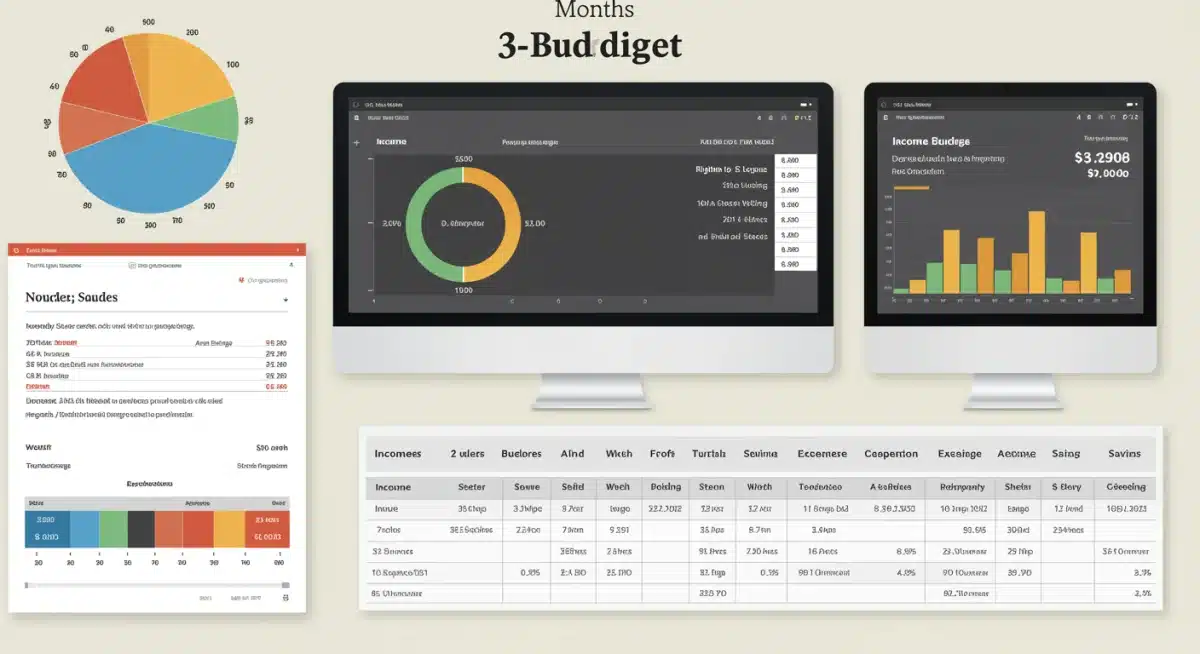
Modern technology offers a plethora of tools to simplify budget management and enhance its educational aspect. Various apps and software platforms can automate expense tracking, categorize transactions, and provide visual summaries of financial activity.
These tools can provide instant feedback on spending habits, making it easier to identify areas where adjustments are needed. They also reduce the time commitment associated with manual tracking, allowing more focus on analysis and decision-making.
While technology can be a powerful aid, it is important to remember that the human element of understanding and actively managing finances remains paramount. The educational value of budgeting comes from the engagement, not just the automation.
Overcoming Challenges in Budget Implementation
Implementing a spending plan, particularly for a specific period like three months, often presents various challenges that test an individual’s resolve and adaptability. Recognizing these hurdles beforehand can significantly improve the chances of success.
Unexpected expenses, such as medical emergencies or home repairs, can easily derail a meticulously planned budget. The key is to build a contingency fund into the plan, demonstrating a proactive approach to financial resilience.
Another common challenge is the temptation of impulse purchases or lifestyle inflation, where increased income leads to increased spending rather than increased savings. Addressing these behavioral aspects is integral to maximizing the educational value of budgeting.
Strategies for Maintaining Motivation
Maintaining motivation throughout the 3-month period is crucial for the plan’s success. Setting small, achievable milestones can provide a sense of accomplishment and encourage continued adherence to the budget.
Regularly reviewing progress and celebrating small victories, such as staying within a spending category or reaching a mini-savings goal, can significantly boost morale. Visual aids, like progress charts, can also be highly effective motivators.
Connecting the budgeting efforts to larger, long-term financial aspirations helps reinforce the purpose and educational value of budgeting. Remembering the ‘why’ behind the ‘what’ can provide the necessary drive during challenging times.
- Set up automated transfers to savings accounts to reduce temptation.
- Find a budgeting buddy or join a financial support group for shared accountability.
- Reward yourself with non-monetary treats for sticking to your plan.
The Long-Term Impact of Budgeting Education
The insights gained from implementing a 3-month spending plan for 2026 extend far beyond the specified timeframe. This practical experience lays a robust foundation for lifelong financial health and informed decision-making.
Individuals who actively engage in budgeting develop a deeper understanding of their financial ecosystem, fostering a sense of control and confidence. This empowerment is a critical component of the overall educational value of budgeting.
The habits formed during this intensive budgeting period often become ingrained, leading to sustained responsible financial behavior. This includes continued tracking, strategic saving, and thoughtful spending, regardless of future income fluctuations.

Preparing for Future Financial Milestones
The educational value of budgeting is particularly evident in how it prepares individuals for significant future financial milestones. Whether it’s purchasing a home, funding higher education, or planning for retirement, the skills acquired through budgeting are indispensable.
By understanding how to allocate resources effectively and manage debt, individuals are better equipped to navigate complex financial decisions. This proactive approach minimizes stress and maximizes the potential for achieving long-term goals.
Moreover, the discipline cultivated through budgeting fosters a mindset of continuous financial learning and adaptation, ensuring that individuals remain agile and responsive to changing economic conditions throughout their lives.
Integrating Budgeting into Educational Frameworks
Recognizing the profound educational value of budgeting, there is a growing movement to integrate financial literacy and budgeting skills into formal educational frameworks. This ensures that future generations are equipped with essential money management competencies from an early age.
Schools and universities are increasingly incorporating modules on personal finance, including practical budgeting exercises. This proactive approach aims to bridge the gap between theoretical knowledge and real-world application, making financial education more relevant and impactful.
Such integration not only empowers individuals but also contributes to broader economic stability by fostering a financially literate populace. The emphasis on practical skills like creating a 3-month spending plan for 2026 is vital for this initiative.
The Role of Community Programs and Workshops
Beyond formal education, community programs and workshops play a crucial role in promoting financial literacy and the educational value of budgeting. These initiatives often reach diverse demographics, providing accessible and practical guidance.
Workshops on topics such as debt management, saving strategies, and creating spending plans offer direct, actionable advice. They provide a supportive environment where individuals can learn from experts and peers, fostering a sense of shared learning and empowerment.
These programs are instrumental in reinforcing the importance of budgeting as a life skill, not just a financial tool. They help individuals translate abstract financial concepts into concrete plans, like a 3-month spending plan for 2026, tailored to their unique circumstances.
| Key Aspect | Brief Description |
|---|---|
| Educational Value | Fosters financial literacy, discipline, and informed decision-making. |
| 3-Month Plan Purpose | Provides a focused, manageable period for behavioral adjustment and goal setting. |
| Key Components | Income tracking, expense categorization, realistic goal setting, and regular adjustments. |
| Long-Term Impact | Cultivates lifelong financial health, prepares for milestones, and promotes economic stability. |
Frequently Asked Questions About Budgeting
The primary educational value of budgeting lies in its ability to cultivate financial literacy, discipline, and informed decision-making. It provides a practical framework for understanding income, expenses, and savings, empowering individuals to manage their money effectively and strategically for their future.
A 3-month spending plan for 2026 is recommended because it offers a balanced timeframe. It’s long enough to identify consistent spending patterns and short enough to maintain focus and allow for quick adjustments to economic shifts. This makes it an ideal learning tool for financial adaptability.
Technology, through budgeting apps and software, can automate expense tracking, categorize transactions, and provide real-time financial insights. This enhances the educational value by simplifying data management, allowing individuals to focus more on analyzing their spending habits and making strategic financial decisions.
Common challenges include unexpected expenses, impulse purchases, and lifestyle inflation. Overcoming these requires building a contingency fund, practicing mindful spending, and regularly reviewing and adjusting the budget. Addressing these behavioral aspects is crucial for successful budget implementation.
Budgeting contributes to long-term financial health by fostering disciplined habits, preparing individuals for major financial milestones, and instilling a mindset of continuous financial learning. The skills gained empower individuals to manage debt, save effectively, and make informed decisions throughout their lives.
Looking Ahead: Sustaining Financial Literacy
The implementation of a 3-month spending plan for 2026 serves as more than just a temporary financial exercise; it is a vital step in fostering enduring financial literacy. The lessons learned in managing income and expenses during this focused period are transferable skills, crucial for navigating an increasingly complex economic landscape.
As we move beyond 2026, the principles of discerning needs from wants, understanding debt implications, and prioritizing savings will remain paramount. This foundational experience reinforces the profound educational value of budgeting, shaping responsible financial citizens for years to come.
Continued emphasis on financial education, both individually and institutionally, will be essential. This ensures that the practical application of budgeting, as exemplified by a short-term spending plan, becomes a continuous journey toward financial empowerment and stability for all.
